How Targeted Notifications Shape Engagement Cycles in British Online Gaming Applications
Erik Keller · Sep 8, 2026
How Targeted Notifications Shape Engagement Cycles in British Online Gaming Applications
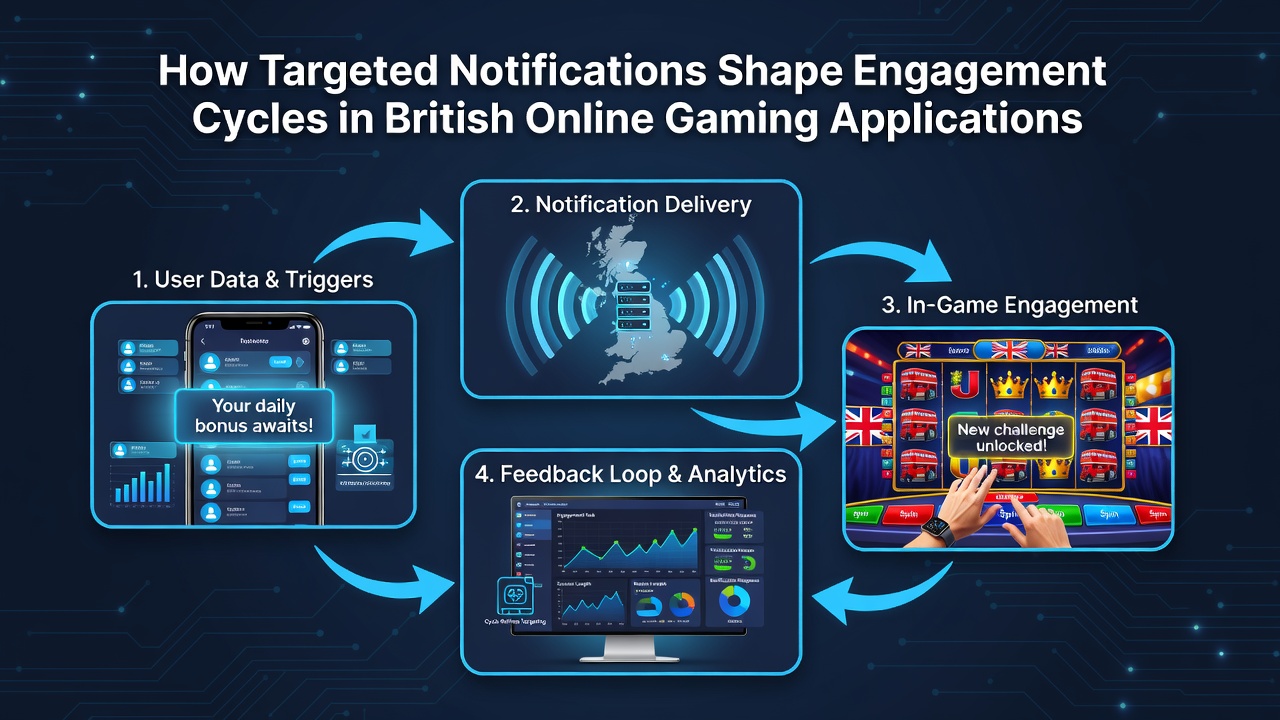
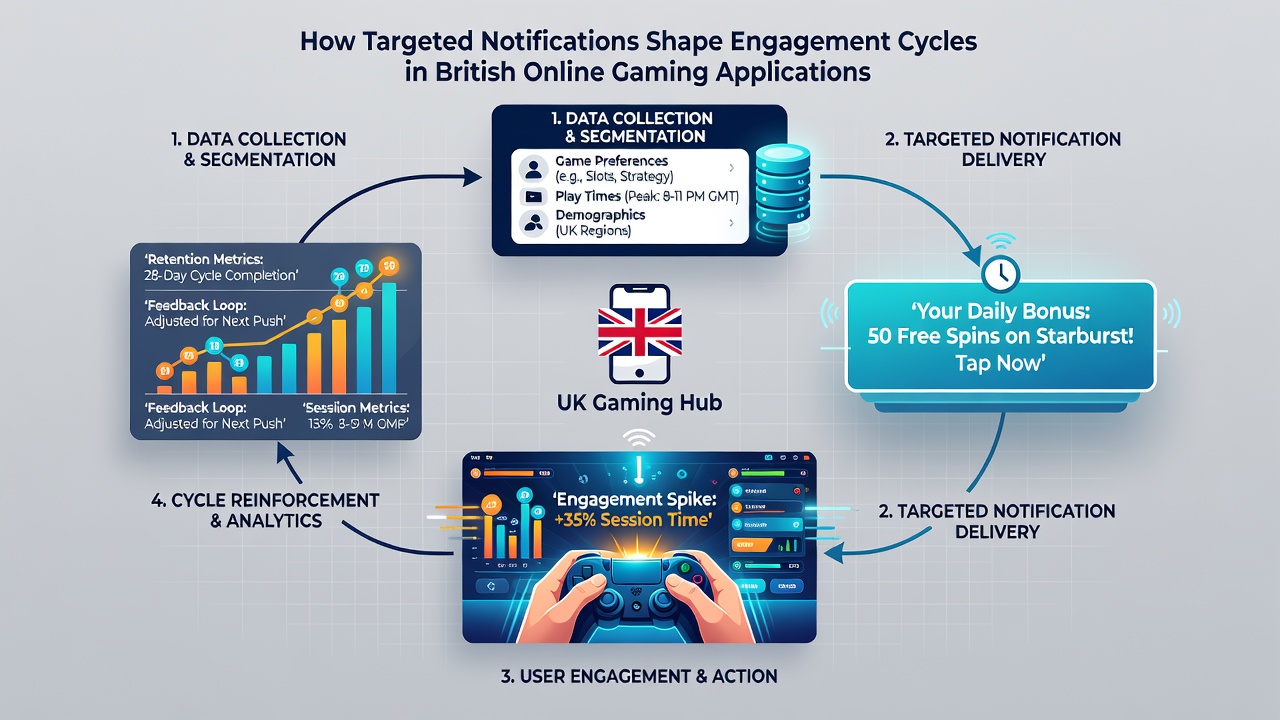
Targeted notifications function as timed digital prompts that reach users through mobile applications in the British online gaming sector, and these messages draw directly from patterns in player activity such as session duration, game preferences, and previous interactions. Developers collect behavioral data to trigger alerts that align with individual habits, which in turn influences the frequency and length of return visits. Research indicates that such systems create repeating loops where initial engagement leads to notification delivery, subsequent logins, and further data collection that refines future messages.
Mechanics Behind User Retention Loops
Engagement cycles in these applications typically follow a sequence that begins with user registration, moves through active play periods, and extends into periods of inactivity when notifications intervene to prompt re-entry. Analysts at industry research firms have documented how notifications timed after a user reaches a milestone, such as completing a level or achieving a streak, maintain momentum within the cycle. Data shows that messages sent within two hours of a session ending produce higher open rates than those distributed at random intervals, because they capitalize on recent memory of the experience. Observers note that British operators adjust delivery windows based on time-zone patterns and device usage statistics to increase the chance of immediate response.
Personalization Through Behavioral Data
Algorithms segment users according to variables including preferred game types, average spend per session, and peak activity hours, then generate content that matches those profiles. For instance, a player who frequently joins tournament-style events receives alerts about upcoming registrations, while someone focused on casual play sees reminders about daily login rewards. Reports from the Gaming Association of Australia highlight similar segmentation methods used across multiple markets, where location-based triggers and historical performance metrics combine to increase relevance. This approach reduces the volume of generic messages and concentrates on signals that correlate with higher response likelihood.
Measured Effects on Session Frequency and Duration
Studies conducted by academic groups have tracked how notification exposure correlates with changes in return rates. One analysis of aggregated app telemetry found that users who opted into personalized alerts logged in 1.8 times more often over a 30-day period compared with those who disabled notifications entirely. Session lengths also extended when messages referenced specific in-app achievements rather than broad promotions. Figures from European digital marketing consortia reveal that click-through rates for behaviorally matched notifications average 12 percent higher than standard broadcasts, although actual conversion to extended play depends on follow-up content quality. In September 2026, updated platform analytics from several British providers showed sustained lifts in weekly active users when notification cadences incorporated machine-learning adjustments for fatigue detection.
Regulatory Context and Compliance Standards
British online gaming applications operate under frameworks that require clear opt-in mechanisms and easy unsubscribe options for all push communications. Compliance teams review notification templates to ensure they avoid language that could be interpreted as pressure to continue playing. Industry bodies in Canada and the United States have published parallel guidelines that emphasize transparency in data usage for message targeting, and operators in Britain often align internal policies with these international benchmarks to streamline cross-border development. Records from regulatory filings demonstrate that applications maintaining detailed audit trails for notification triggers experience fewer compliance queries during periodic reviews.
Implementation Examples Across Major Platforms
One major British operator introduced a notification series that highlighted weekly progress summaries for users who had paused activity for more than five days, resulting in a documented rise in reactivations during the following quarter. Another application tested location-triggered messages for users near major sporting events, linking those prompts to related in-app features and recording measurable upticks in concurrent sessions. Researchers from the University of Nevada, Las Vegas tracked similar experiments in controlled environments and confirmed that relevance of the message content outweighed sheer frequency in sustaining long-term engagement metrics. These cases illustrate how iterative testing of notification variables refines the overall cycle without requiring broad changes to core game mechanics.
Conclusion
Targeted notifications continue to serve as a primary mechanism for shaping engagement cycles in British online gaming applications through data-informed timing and content selection. Evidence from multiple markets indicates consistent patterns where personalization increases return visits and session depth when paired with appropriate consent and compliance measures. Ongoing refinements in algorithm design and cross-regional standard alignment point toward further integration of these tools as platforms evolve through 2026 and beyond.